Showing posts with label crm 2011. Show all posts

October 29, 2014

Open CRM 4.0 and CRM 2011 instances using previous Internet Explorer versions

Dynamics CRM 2015 will be available soon but many customers are still using successfully CRM 4.0 (released in 2007) or CRM 2011 (nearly 4 years old) for their business processes. On the other hand we have Operating Systems and browsers updated regularly due to security reasons or machine upgrades.

Dynamics CRM has been always compatible with Internet Explorer but not with all the versions, we can't expect to use Internet Explorer 6 with the latest version or pretend to use IE11 with CRM 4.0.

As developer I faced this issue when I upgraded my PC to Windows 8 and Internet Explorer 11, I wasn't able anymore to use a CRM 2011 instance, the mobile version was prompted to me.


CRM 2011 is compatible with Internet Explorer 11, but it must have Rollup 17 installed, and that wasn't the case.
Which Internet Explorer version can be used in order to access correctly Dynamics CRM? Assuming we don't know if a rollup is installed, the IE versions that can be used with RTM are:

Internet Explorer 6 and 7 for CRM 4.0
Internet Explorer 7, 8 and 9 for CRM 2011
Internet Explorer 8, 9, 10 for CRM 2013

Based on this data Internet Explorer 7 is the best candidate for CRM 4.0 and CRM 2011. We can rely on a Virtual Machine in order to use a previous Internet Explorer version without messing up our current environment.

Creating a VM is a tedious process and it can take several hours. Lucky for us Microsoft provides a set of Internet Explorer VMs ready to be downloaded.
They are available at modern.IE, the intended use is to test a website compatibility with old browsers but they are also good to access occasionally to Dynamics CRM. I wrote occasionally because these VMs are not meant for a production use and the Windows version included is a trial.
If it's necessary to use constantly an older browser (or you have a Mac) it's better to build a proper VM with the right licenses.
The following VMs are available at modern.IE:

IE 6 - Windows XP
IE 8 - Windows XP
IE 7 - Windows Vista
IE 8 - Windows 7
IE 9 - Windows 7
IE 10 - Windows 7
IE 11 - Windows 7
IE 10 - Windows 8
IE 11 - Windows 8.1

Personally I use VirtualBox (you need to disable Hyper-V in Windows 8 to get better performances) but the VMs are available also for Hyper-V, VMWare, Virtual PC and Parallels.

October 20, 2014

Google Chrome 38 Lookup Fix

In my previous post I analyzed the lookup issue caused by the latest version of Google Chrome (link) but I wasn't able to provide a solution.

UPDATE:
Google Chrome 38.0.2125.111 fixed the lookup error, please update it.

Some days ago Jon Grant wrote a JavaScript patch based on my post, you can find it here:
http://jongrant.org/2014/10/17/patch-for-chrome-38-lookup-error-in-dynamics-crm-2013/

His solution is unsupported but effective. Starting from his JavaScript patch I created a managed solution that includes this (unsupported) fix in all the entity forms.
The solution works with CRM 2013, but it's not tested with CRM 2011 UR12+.

Download from Codeplex:
https://chrome38lookupfix.codeplex.com/

REMEMBER THAT THIS SOLUTION IS UNSUPPORTED.

October 10, 2014

Lookup errors with Google Chrome 38

Google released a new version (38.0.2125.101) that breaks (again) Dynamics CRM. When users try to open a lookup they get the following error:

Currently there isn't a fix for this issue and it is not related to the previous showModalDialog issue.

UPDATE:
Google Chrome 38.0.2125.111 fixed the lookup error, please update it.

A managed solution (unsupported) that fix this issue is available:
Google Chrome 38 Lookup Fix

Offline installers of Google Chrome V37 (32 and 64 bit) are available:
Google Chrome 37.0.2062.124 32 bit (MD5: 6CF617A12FB9B7169B6C69D328F63389)
Google Chrome 37.0.2062.124 64 bit (MD5: 91644DE37A8EC506163FCBBCBD9AD0E4)

Microsoft Support KB Article regarding this issue: http://support2.microsoft.com/kb/3008160

Now I will explain what and how Google Chrome broke the lookup functionality:

When the user opens a lookup, CRM calls the web service AppWebServices/LookupService.asmx (message RetrieveInlineSearchResults) in order to fetch the preview records:

With Internet Explorer and Firefox the web service returns 200 (OK) but with Google Chrome it returns 500 (Internal Server Error). Which is the difference between the POST request made by Chrome and the other browsers?
The correct request body is the following:
<?xml version="1.0" encoding="utf-8" ?>
<soap:Envelope xmlns:soap="http://schemas.xmlsoap.org/soap/envelope/" xmlns:xsi="http://www.w3.org/2001/XMLSchema-instance" xmlns:xsd="http://www.w3.org/2001/XMLSchema">
    <soap:Body>
        <RetrieveInlineSearchResults xmlns="http://schemas.microsoft.com/crm/2009/WebServices">
            <typesArray>
                <int>1</int>
                <int>2</int>
            </typesArray>
            <bindingColumns></bindingColumns>
            <additionalParameters>...</additionalParameters>
            <positions>
                <int>0</int>
            </positions>
            <resolveEmailAddress>false</resolveEmailAddress>
            <savedQueryTypeParameter></savedQueryTypeParameter>
            <defaultViewId></defaultViewId>
            <values>
                <string></string>
            </values>
            <sortResults>true</sortResults>
        </RetrieveInlineSearchResults>
    </soap:Body>
</soap:Envelope>
Chrome V38 doesn't add the piece
            <values>
                <string></string>
            </values>
causing the web service call to fail.
I debugged the CRM JavaScript and I found the connected piece of code (JsProvider.ashx):
!isNullOrEmptyString($v_D) && $v_0.SetParameter("values", $v_6);
$v_6 contains the text inside the lookup, after CRM will put this value inside an array called aParameters (script global.ashx) in order to build the SOAP request.
CRM doesn't use an object but an array to handle the values and check with a function called IsNull if the value is already inside the parameters:
function pushCommandParameter(oParameter) {
    // oParameter.Name is "values"
    if (!IsNull(aParameters[oParameter.Name])) // Google Chrome returns always true when oParameter.Name is "values" !!!
        aParameters[aParameters[oParameter.Name]] = oParameter;
    else {
        aParameters[oParameter.Name] = aParameters.length;
        aParameters.push(oParameter);
    }
}
Google Chrome returns something when you access the property "values" of an array. This can be easily tested:
var myArray = new Array();
alert(myArray['values']); // it returns function values() { [native code] }
alert(myArray['anotherparameter']); // it returns undefined
Due to this new behavior of the arrays the SOAP request is not created correctly (the missing <values><string></string></values> piece) and CRM returns 500 (Internal Server Error).

Which is the reason of this change? Google Chrome V38 introduced a partial support for ECMAScript 6, including the method Array.prototype.values() that causes this behavior and consequently the lookup errors inside Dynamics CRM.

A fix is not available (an update of Google Chrome or Dynamics CRM is the only solution) so if you still have Google Chrome V37 you can disable the auto-update (instructions here) or use another browser (Internet Explorer or Firefox).

October 7, 2014

Dynamics CRM Compatibility List URLs

Microsoft updated the support page for Dynamics CRM and divided the Compatibility List based on the version.

The new URLs are:

Compatibility with Microsoft Dynamics CRM 2013
Compatibility with Microsoft Dynamics CRM 2011
Compatibility with Microsoft Dynamics CRM 4.0

My page Resources for CRM Developers has been updated to include these links.

September 29, 2014

Check if a User has a specific Privilege

I came across a question on Dynamics Community forums where the asker wanted to check if a CRM User has or not a specific privilege of a custom entity.

He wanted to avoid the use of the RetrievePrincipalAccessRequest because it requires to provide an existing record id in order to perform the request. I agree with this, in addition the result of a RetrievePrincipalAccessRequest doesn't guarantee that the user has the privilege, but only that the user can access to that specific record (for example when the record is only shared to the user).

A good aspect of the privileges is that they respect a naming convention, so the Read privilege for the Account entity is called prvReadAccount, the Write privilege prvWriteAccount, etc etc. This naming convention is valid also for custom entity, so if we have an entity called new_SMS and we want to know if the user can create a new_SMS record, we will check for the prvCreatenew_SMS privilege.

The easy way it to check first that the privilege is inside the CRM and after to compare its Id with the values returned by a RetrieveUserPrivilegesRequest:
bool userHasPrivilege = false;

ConditionExpression privilegeCondition =
    new ConditionExpression("name", ConditionOperator.Equal, "prvCreatenew_SMS"); // name of the privilege
FilterExpression privilegeFilter = new FilterExpression(LogicalOperator.And);
privilegeFilter.Conditions.Add(privilegeCondition);

QueryExpression privilegeQuery = new QueryExpression
{
    EntityName = "privilege",
    ColumnSet = new ColumnSet(true),
    Criteria = privilegeFilter
};

EntityCollection retrievedPrivileges = service.RetrieveMultiple(privilegeQuery);
if (retrievedPrivileges.Entities.Count == 1)
{
    RetrieveUserPrivilegesRequest request = new RetrieveUserPrivilegesRequest();
    request.UserId = userId; // Id of the User
    RetrieveUserPrivilegesResponse response = (RetrieveUserPrivilegesResponse)service.Execute(request);
    foreach (RolePrivilege rolePrivilege in response.RolePrivileges)
    {
        if (rolePrivilege.PrivilegeId == retrievedPrivileges.Entities[0].Id)
        {
            userHasPrivilege = true;
            break;
        }
    }
}
The hard way it to build a single MEGA query to perform the same check (4 LinkEntity!):
bool userHasPrivilege = false;

QueryExpression privilegeQuery = new QueryExpression("privilege");
privilegeQuery.ColumnSet = new ColumnSet(true);
LinkEntity privilegeLink1 = new LinkEntity("privilege", "roleprivileges", "privilegeid", "privilegeid", JoinOperator.Inner);
LinkEntity privilegeLink2 = new LinkEntity("roleprivileges", "role", "roleid", "roleid", JoinOperator.Inner);
LinkEntity privilegeLink3 = new LinkEntity("role", "systemuserroles", "roleid", "roleid", JoinOperator.Inner);
LinkEntity privilegeLink4 = new LinkEntity("systemuserroles", "systemuser", "systemuserid", "systemuserid", JoinOperator.Inner);

ConditionExpression userCondition = new ConditionExpression("systemuserid", ConditionOperator.Equal, userId); // // Id of the User
ConditionExpression privilegeCondition = new ConditionExpression("name", ConditionOperator.Equal, "prvCreatenew_SMS"); // name of the privilege

privilegeLink4.LinkCriteria.AddCondition(userCondition);
FilterExpression privilegeFilter = new FilterExpression(LogicalOperator.And);
privilegeFilter.Conditions.Add(privilegeCondition);
privilegeQuery.Criteria = privilegeFilter;

privilegeLink3.LinkEntities.Add(privilegeLink4);
privilegeLink2.LinkEntities.Add(privilegeLink3);
privilegeLink1.LinkEntities.Add(privilegeLink2);
privilegeQuery.LinkEntities.Add(privilegeLink1);

EntityCollection retrievedPrivileges = service.RetrieveMultiple(privilegeQuery);
if (retrievedPrivileges.Entities.Count > 0) { userHasPrivilege = true; }

September 28, 2014

Entity.GetAttributeValue<T> and ActivityParty

GetAttributeValue<T> is a method of the Entity class, it is used to retrieve easily the entity's values. You can find a detailed overview by Dave Berry here:
Entity.GetAttributeValue Explained

Dynamics CRM includes a special data type called ActivityParty (an overview here) and despite its special status we can still use GetAttributeValue<T> method against the fields using this data type.

First of all the ActivityParty attributes hold an EntityCollection of activityparty entities, these entities are a pointer to the real records through the partyid attribute (EntityReference).
Entity email = service.Retrieve("email", emailId, new ColumnSet(true));
EntityCollection to = email.GetAttributeValue<EntityCollection>("to");
A big difference when using the GetAttributeValue<T> with the EntityCollection than the EntityReference is the case when the attribute is null.

With EntityReference the method GetAttributeValue<T> returns a null if the attribute is empty.
EntityReference parentAccountRef = account.GetAttributeValue<EntityReference>("parentaccountid");
if (parentAccountRef != null) { /* code here */ }
With EntityCollection we can have null if the attribute is not inside the collection or an EntityCollection with no values inside the Entities property if the attribute is empty but inside the attributes list.
The second scenario is very common, for example when retrieving an email, the attributes from,to,cc,bcc are always returned.
Entity email = service.Retrieve("email", emailId, new ColumnSet(true));
EntityCollection to = email.GetAttributeValue<EntityCollection>("to");
EntityCollection cc = email.GetAttributeValue<EntityCollection>("cc");
if (to != null) { Console.WriteLine("Records inside To: " + to.Entities.Count.ToString(); }
if (cc != null) { Console.WriteLine("Records inside Cc: " + cc.Entities.Count.ToString(); }
Even if we have an usable EntityCollection, it's necessary additional code to get the reference to the real records contained inside the ActivityParty attributes.
To simplify the access to the values I created an extension method (called GetEntityReferenceCollectionValue) to return an EntityReferenceCollection from an ActivityParty field:
public static EntityReferenceCollection GetEntityReferenceCollectionValue(
    this Entity entity, string attributeLogicalName)
{
    EntityReferenceCollection entityReferenceCollection = new EntityReferenceCollection();
    EntityCollection entityCollection = entity.GetAttributeValue<EntityCollection>(attributeLogicalName);
    if (entityCollection != null)
    {
        foreach (Entity item in entityCollection.Entities)
        {
            EntityReference partyIdReference = item.GetAttributeValue<EntityReference>("partyid");
            if (partyIdReference != null) { entityReferenceCollection.Add(partyIdReference); }
        }
    }
    return entityReferenceCollection;
}
EntityReferenceCollection is a class that holds a list of EntityReference, it's normally used inside the Associate/Disassociate operations, but nothing stop us to reuse it to hold all the EntityReference entries of an EntityCollection.

The use is straightforward:
Entity email = service.Retrieve("email", emailId, new ColumnSet(true));
EntityReferenceCollection to = email.GetEntityReferenceCollectionValue("to");
If it's necessary to retrieve the actual entities I created a method called GetEntitiesFromEntityReferenceCollection, it requires as parameters the IOrganizationService and the EntityReferenceCollection. The value returned is an IEnumerable<Entity>:
public static IEnumerable<Entity> GetEntitiesFromEntityReferenceCollection(
    IOrganizationService service, EntityReferenceCollection entityReferenceCollection)
{
    List<Entity> entities = new List<Entity>();
    foreach (EntityReference entityReference in entityReferenceCollection)
    {
        try
        {
            Entity entity = service.Retrieve(entityReference.LogicalName, entityReference.Id, new ColumnSet(true));
            entities.Add(entity);
        }
        catch { }
    }
    return entities.AsEnumerable<Entity>();
}
Example:
Entity email = service.Retrieve("email", emailId, new ColumnSet(true));
EntityReferenceCollection to = email.GetEntityReferenceCollectionValue("to");
var toEntities = GetEntitiesFromEntityReferenceCollection(service, to);

September 21, 2014

Manage multiple Dynamics CRM users with Google Chrome

Google Chrome is one of the supported browsers for Dynamics CRM, many users choose it because it's faster than Internet Explorer or because they need to access different CRM instances or the same instance with a different role, for example they use Internet Explorer to login with a System Administrator user and Google Chrome with a Sales Manager one.

This last scenario is very common for developers, consultants or administrators, they deal with different customers or CRM trials so everytime is necessary to sign out, find the username/password, sign in again, etc etc.

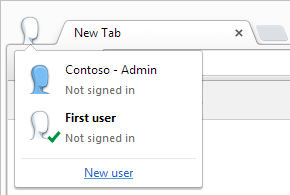
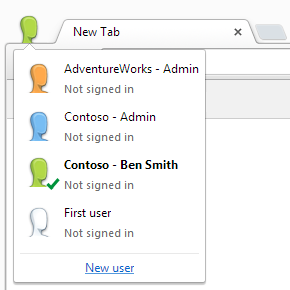
A very useful functionality offered by Google Chrome is the possibility to have multiple users on the same machine, each user will act as a standalone browser without sharing the settings. We can rely on this function in order to switch easily between Dynamics CRM users and/or instances.

Step by Step tutorial:

Open the Google Chrome menu on the browser toolbar and select Settings.
In the Users section, click Add new user...

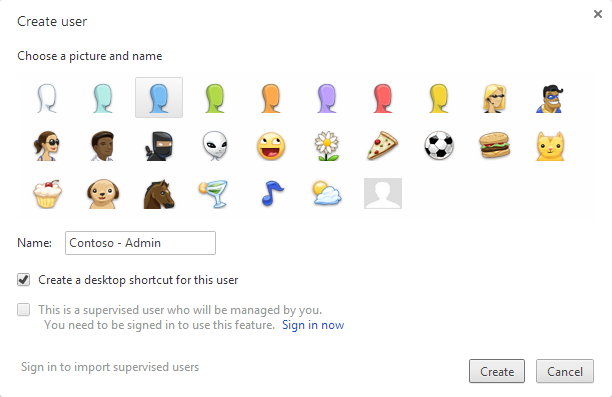
The following dialog will appear, select an icon and a name


You can select to have a desktop shortcut, to access directly the new user


You can easily switch between the user by clicking the icon in the top left corner


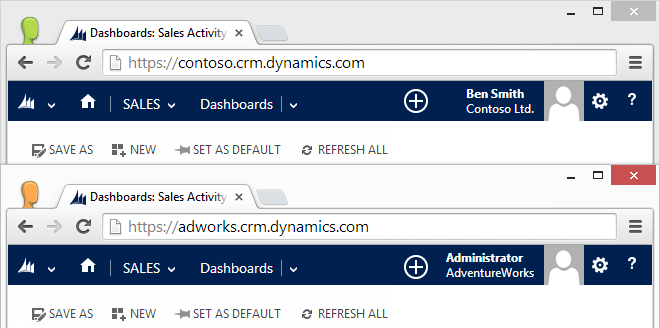
You can create users for different organizations or users for the same organization


And more important, you can run multiple users at the same time

September 12, 2014

Google Chrome registry fix for Dynamics CRM 2011/2013

Due to the errors caused by the latest Google Chrome update (details here) I created .reg file to reactivate showModalDialog API, you can download from here:

Enable Chrome showModalDialog.reg

After the download is completed close Google Chrome, double-click the .reg file and click Yes to the Registry Editor prompt:

I also created a page to test the showModalDialog API:

Test Page for showModalDialog API

August 7, 2014

Dynamics CRM special data types

Dynamics CRM includes some data types not available for custom fields. Because these field types act slightly different from the standard ones, it's necessary to pay attention during development.

This post is focused on the following data types:
  • Owner
  • Customer
  • Party List (ActivityParty)
Owner
Owner is a data type used for the built-in OnwerId field. This field is present only when an entity has the Ownership set to User or Team, it's not present if the entity's ownership is Organization. It can hold one user or one team record.

Customer
Customer data type is used when a field can hold one account or one contact record. Contact and Lead entities use this data type (ParentCustomerId and CustomerId respectively).

Party List
Party List (also known as Activity Party) is the most complex data type, it can hold more than one record at the same time and the possible entities are defined by the ParticipationTypeMask attribute.
For example the Email To field can hold all these entities:


Client-side (JavaScript)
Handling these data types in JavaScript is quite easy, they look like and act as standard lookup fields, we need to only pay attention to the entity LogicalName (property entityType) of the record(s).

Owner
// set the owner of the current record to a team
// note: this code works only when the form is on create method, to update the owner it's always necessary to use the AssignRequest message

var team = new Array();
team[0] = new Object();
team[0].id = "c9c77fd3-036a-47e0-857d-a4d56f21d8ee";
team[0].name = "Sales Team";
team[0].entityType = "team";
Xrm.Page.getAttribute("ownerid").setValue(team);

// check if the owner is a team or a user
var owner = Xrm.Page.getAttribute("ownerid").getValue();
if (owner != null) {
    alert("The owner type of this record is " + owner[0].entityType);
}
Customer
// set the parent customer of a contact

var parent = new Array();
parent[0] = new Object();
parent[0].id = "cd7f603d-e199-4b66-9ca7-3386093e9a50";
parent[0].name = "Test Account";
parent[0].entityType = "account";
Xrm.Page.getAttribute("parentcustomerid").setValue(parent);

// check if the customer of a lead is an account or a contact
var customer = Xrm.Page.getAttribute("customerid").getValue();
if (customer != null) {
    alert("The customer type of this lead is " + customer[0].entityType);
}
Party List
// set the to field of an email to a contact and a user

var recipients = new Array();
recipients[0] = new Object();
recipients[0].id = "72bf360d-3dd8-4538-a5ce-91a4be6af517";
recipients[0].name = "John Smith";
recipients[0].entityType = "contact";

recipients[1] = new Object();
recipients[1].id = "d4e1f6f5-1a2d-4571-bec7-9bd1ea1696d0";
recipients[1].name = "Tom Green";
recipients[1].entityType = "user";

Xrm.Page.getAttribute("to").setValue(recipients);

// get the total count of records inside the To field
var to = Xrm.Page.getAttribute("to").getValue();
if (to != null) {
    alert("The total count of records inside To field is " + to.length);
    alert("The last record type is " + to[to.length-1].entityType);
}
Server-side (C#)
Server-side we have some differences, although Owner and Customer data types are EntityReference, Party List type is an ActivityParty.

Owner
// set the owner of the current record to a team
// note: this code works only when the form is on create method, to update the owner it's always necessary to use the AssignRequest message

// late bound
EntityReference team = new EntityReference("team", new Guid("c9c77fd3-036a-47e0-857d-a4d56f21d8ee"));
entity["ownerid"] = team;

// early bound
EntityReference team = new EntityReference(Team.EntityLogicalName, new Guid("c9c77fd3-036a-47e0-857d-a4d56f21d8ee"));
MyEntity.OwnerId = team; 

// check if the owner is a team or a user

// late bound
if (entity.Contains("ownerid") && entity["ownerid"] != null) {
    EntityReference owner = (EntityReference)entity["owner"];
    Console.WriteLine("The owner type of this record is " + owner.LogicalName);
}
// early bound
if (MyEntity.OwnerId != null) {
    Console.WriteLine("The owner type of this record is " + MyEntity.OwnerId.LogicalName);
}
Customer
// set the parent customer of a contact

// late bound
EntityReference parent = new EntityReference("account", new Guid("cd7f603d-e199-4b66-9ca7-3386093e9a50"));
entity["parentcustomerid"] = parent;

// early bound
EntityReference parent = new EntityReference(Account.EntityLogicalName, new Guid("cd7f603d-e199-4b66-9ca7-3386093e9a50"));
MyEntity.ParentCustomerId = parent; 

// check if the customer of a lead is an account or a contact

// late bound
if (entity.Contains("customerid") && entity["customerid"] != null) {
    EntityReference customer = (EntityReference)entity["customerid"];
    Console.WriteLine("The customer type of this lead is " + customer.LogicalName);
}

// early bound
if (MyEntity.ParentCustomerId != null) {
    Console.WriteLine("The customer type of this lead is " + MyEntity.ParentCustomerId.LogicalName);
}
Party List
// set the to field of an email to a contact and a user

// late bound
Entity to1 = new Entity("activityparty");
to1["partyid"] = new EntityReference("contact", new Guid("72bf360d-3dd8-4538-a5ce-91a4be6af517"));
Entity to2 = new Entity("activityparty");
to2["partyid"] = new EntityReference("user", new Guid("d4e1f6f5-1a2d-4571-bec7-9bd1ea1696d0"));
entity["to"] = new Entity[] { to1, to2 };

// early bound
ActivityParty To1 = new ActivityParty();
To1.PartyId = new EntityReference(Contact.EntityLogicalName, new Guid("72bf360d-3dd8-4538-a5ce-91a4be6af517"));
ActivityParty To2 = new ActivityParty();
To2.PartyId = new EntityReference(SystemUser.EntityLogicalName, new Guid("72bf360d-3dd8-4538-a5ce-91a4be6af517"));
MyEntity.To = new ActivityParty[] { To1 , To2 }

// get the total count of records inside the To field

// late bound

if (entity.Contains("to") && entity["to"] != null) {
    EntityCollection to = (EntityCollection)entity["to"];
    Console.WriteLine("The total count of records inside To field is " + to.Entities.Count.ToString());
    if (to.Entities.Count > 0) {
        EntityReference lastparty = (EntityReference)to.Entities.Last()["partyid"];
        Console.WriteLine("The last record type is " + lastparty.LogicalName);
    }
}

//early bound
if (MyEntity.To != null) {
    Console.WriteLine("The total count of records inside To field is " + MyEntity.To.Count().ToString());
    if (MyEntity.To.Count() > 0) {
        Console.WriteLine("The last record type is " + MyEntity.To.Last().PartyId.LogicalName);
    }
}

July 25, 2014

Don't use getSelectedOption().text

OptionSet is a particular field in Dynamics CRM, basically is a key-value pair array, where the key is an integer and the value is a string.
Xrm Object provides several methods to interact with an OptionSet field, including the infamous getSelectedOption. But why a developer should avoid a supported Xrm method? The reason is simple, it can easily lead to JavaScript errors, as the getSelectedOption().text case.

getSelectedOption returns the selected option as an object with this structure:
// CustomerTypeCode OptionSet - Account Entity
{"value": 8, "text": "Prospect"}
It's true that we can access the object properties in order to get the label using the syntax getSelectedOption().text (and getSelectedOption().value) but only if the OptionSet field is not empty. If there isn't a value selected, the getSelectedOption() will return null and not an object.
// this code generates an error if the field is empty
var customerType = Xrm.Page.getAttribute("customertypecode").getSelectedOption().text;
A workaround is to check if the object is not null:
var customerType = "";
var option = Xrm.Page.getAttribute("customertypecode").getSelectedOption();
if (option != null) {
    customerType = option.text;
}
But Xrm object provides a separate method to retrieve the text of a selected OptionSet, this method is getText, and more important when no option is selected, getText will return an empty string value.

Error-free code:
var customerType = Xrm.Page.getAttribute("customertypecode").getText();
In the same way the standard getValue() must be used instead of getSelectedOption().value, it returns the integer selected value or null if the field is empty:
var customerValue = Xrm.Page.getAttribute("customertypecode").getValue();
if (customerValue != null) {
    // ...
} else {
    // ...
}
Note that getSelectedOption() can be still used in some scenarios, for example when we manipulate the OptionSet using AddOption,RemoveOption or getOptions methods and we want to compare the selected option as object with other values, but never use it to just retrieve the selected OptionSet label.

June 20, 2014

LCID JavaScript Helper Library

Xrm.Page object provides two methods to get the relevant language used inside Dynamics CRM:
  • Xrm.Page.context.getUserLcid() - returns the LCID value that represents the Microsoft Dynamics CRM Language Pack that is the user selected as their preferred language
  • Xrm.Page.context.getOrgLcid() - returns the LCID value that represents the base language for the organization
The value returned is the lcid decimal value, there is not a built-in function to return the culture name ("en-US" for LCID 1033) or the language region ("German (Germany)" for LCID 1031).

The attached library provides an easy way to get the culture name and the language region from the decimal lcid value, it contains two methods:

  • LCIDUtils.getCultureName(lcid)
    returns a string with the culture name of the selected lcid value
    var userLcid = Xrm.Page.context.getUserLcid(); 
    var userCultureName = LCIDUtils.getCultureName(userLcid); 
    alert("User Culture name is: " + userCultureName);
    
  • LCIDUtils.getLanguageRegion(lcid)
    returns a string with the language region of the selected lcid value
    var orgLcid = Xrm.Page.context.getOrgLcid(); 
    var orgLanguageRegion = LCIDUtils.getLanguageRegion(orgLcid); 
    alert("Organization Language Region is: " + orgLanguageRegion);
    
The library can be downloaded from Technet Gallery:
http://gallery.technet.microsoft.com/scriptcenter/LCID-JavaScript-Helper-7cfb0829

Note: The culture name and language region mappings come from this MSDN page: National Language Support (NLS) API Reference (Windows 7)

June 16, 2014

CRM Reports and Barcodes

Yesterday I saw a question on MSDN Dynamics forum: How to rotate an image in SSRS
The asker needed to generate barcodes inside a CRM Online report and shared this link:
Free Reporting Services Barcodes
The idea is to create a bitmap representing the barcode using the font text, in order to keep the aspect consistent between the preview and the exported report.
However he wanted to know how to rotate the bitmap and although I'm not a big fan of SSRS, the question was interesting so I checked the code.
I have some experience with Image Processing (years ago I created this ugly and nowadays outdated software) so I recognized the System.Drawing namespace and its methods.
So I thought: well, if we can use FillRectangle, DrawString and similar, probably RotateFlip will work too. I suggested the following code and it worked:
newBitmap.RotateFlip(System.Drawing.RotateFlipType.Rotate270FlipNone)
Moral of the story: even if the reports for CRM Online have limitations, sometimes we can count on the .NET framework to solve our requirements.

June 8, 2014

Retrieve the members of a specific Team

The code to retrieve the members of a specific Team is quite easy, it's a standard QueryExpression, but contains a linked entity with a condition inside, it's good as start point for similar queries.
// Id of the specific Team
Guid teamId = new Guid("DAC1F09E-02EF-E311-A2AB-D89D67630DBC");
// main query returing users
QueryExpression userQuery = new QueryExpression("systemuser");
// take all columns
userQuery.ColumnSet = new ColumnSet(true);
// this is the intersect condition
LinkEntity teamLink = new LinkEntity("systemuser", "teammembership", "systemuserid", "systemuserid", JoinOperator.Inner);
// this is the condition to use the specific Team
ConditionExpression teamCondition = new ConditionExpression("teamid", ConditionOperator.Equal, teamId);
// add the condition to the intersect
teamLink.LinkCriteria.AddCondition(teamCondition);
// add the intersect to the query
userQuery.LinkEntities.Add(teamLink); 
//get the results
EntityCollection retrievedUsers = service.RetrieveMultiple(userQuery);
// fetch the results
foreach (Entity user in retrievedUsers.Entities)
{
    // Id of the user
    var userId = user.Id;
    // FullName of the user 
    var userFullName = user.Contains("fullname") ? user["fullname"].ToString() : "";
}

June 3, 2014

Dynamics CRM Tools and Utilities from Codeplex

I just discovered Curah!, a free service provided by Microsoft to share links with the possibility to add a comment or a description.
For my first Curah I decided to share a list of tools and utilities for Dynamics CRM available on Codeplex, you can find it here:

http://curah.microsoft.com/70730/dynamics-crm-tools-and-utilities-from-codeplex

May 22, 2014

The revamped Plugin Registration Tool

One of the suggestions I always give when a user has issues with the Plugin Registration Tool is to download first the latest CRM SDK.
The reason is simple: a new rollup installed or a CRM Online update can easily bring some changes with the previous versions of the tool, but if we use the latest version we can hope that the Plugin Registration Tool will work as expected.

Of course I never follow my suggestions, so it took me 2 weeks from the release of the latest CRM SDK (6.1) to discover the new Plugin Registration Tool!


It's easy to spot the switch from the ugly Windows Forms to WPF (Windows Presentation Foundation).

More important is the new position inside the SDK. Now the Plugin Registration Tool is located inside the folder SDK\Tools\PluginRegistration and not anymore inside the folder SDK\Bin.

Another change is the .NET framework required to run the tool, now you must have 4.5 installed:


But the main change is how the connection is handled, in the previous versions was necessary to insert the mysterious discovery url:


The new version is more user-friendly:


First it is necessary to specify the Deployment Type, between On-Premises, Online and Office 365.
For On-Premises is possible to specify the Authentication Source between Active Directory and Internet-facing deployment(IFD) and to use or not the default credentials.
For Online and Office 365, the user can select the Online Region (there is also the option Don't Know)


The functionality of the Plugin Registration Tool is still the same (register and update the plugins, install the profiler, ...) only the Properties box is positioned at the bottom (it is useful to check the assembly version)


A big welcome to the new Plugin Registration Tool!

February 28, 2014

How to use Microsoft Connect site

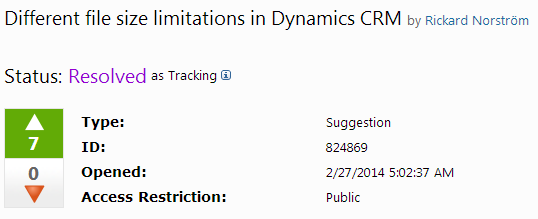
Microsoft Connect (https://connect.microsoft.com/) is the website where users can report bugs or suggestions related to Microsoft products, including Dynamics CRM. Users can upvote (or downvote) the entries, in this way Dynamics CRM product team can prioritize the requests.

Today I saw this tweet from Gustaf Westerlund:
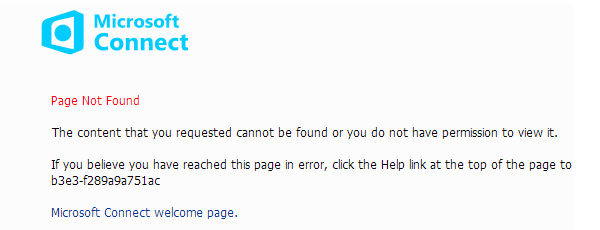
I clicked the link but I got this error:

I got this message because I wasn't currently logged in with my Microsoft Account linked to Connect website. New users can be misguided by the "Page Not Found" written in red, but the truth behind is a permission issue: you need to join first the program in order to see the entries.

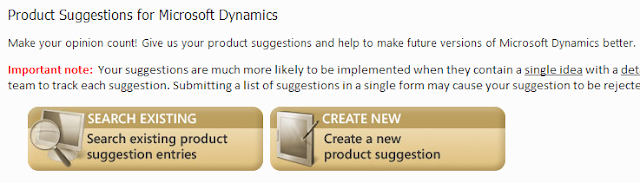
First of all open the Microsoft Connect website and browse the products accepting suggestions:


Find Microsoft Dynamics CRM and click Join:


Login with your Microsoft Account credentials and the Feeback center will be available:


And now it is possible to open the Connect links (related to Dynamics CRM) and start to upvote.


You can also submit a new entry, but search if a similar request is already created by someone else, a single request with 30 upvotes it's more useful than 3 similar requests with 10 votes each.

January 30, 2014

CRM 2013 MB2-703 Exam - My Experience

Preamble: My job position is Microsoft Dynamics CRM Developer, I hold the CRM 2011 Customization and Configuration certification, in the past months I worked with CRM 2013 (online instance mostly)

Yesterday I passed my first CRM 2013 exam: MB2-703 Customization and Configuration, one of the four exams currently available for CRM 2013. (you can find the complete list here)

The exam has just been published, normally I don't rush on certifications but I had a voucher due to expire, in addition I didn't feel ready for the other exam I'm currently preparing.

I had few days to prepare for the exam, but Microsoft released the exam details some days ago, and that was my starting point (and should be your too):

http://www.microsoft.com/learning/en-us/exam.aspx?ID=mb2-703

The "Overview" and "Skill Measured" sections give you a good summary of the exam, and clarify the targets. Because this exam is the natural evolution of the CRM 2011 version and several concepts are still the same, I studied again the MB2-866 study notes from mscrmgeek.com (the site is currently offline, so I made a doc from the google cache and shared here: https://1drv.ms/w/s!AlhBTblgMrjkinvNdNH63asH0vtm)

Of course not all the things are still the same, so my suggestion is to study/check these notes with a CRM 2013 instance.

But this is still a CRM 2013 exam, what else did I study? As I wrote before I worked with CRM 2013, but I wasn't able to see all the new stuff, so I googled "crm 2013 new features" and I found relevant entries:

http://www.powerobjects.com/blog/2013/09/06/top-10-new-features-of-crm-2013/

http://www.crmsoftwareblog.com/2013/11/top-7-new-features-in-crm-2013/

http://www.mohamedibrahim.net/blog/2013/10/11/whats-new-in-microsoft-dynamics-crm-2013-new-features-comparison-of-microsoft-dynamics-crm-2011-versus-crm2013-msdyncrm/

As you can see CRM 2013 is a big step forward for Dynamics CRM, so I made a list of the relevant arguments (keeping an eye on the official exam details), I searched other articles and watched youtube videos, for example I learned about Actions capabilities (http://inogic.com/blog/?p=12), an argument that I didn't face previously with the customers.

I also have a Windows RT tablet, useful to test the mobile features (but the app is available also for Windows 8, so no excuses to try it)

My final thoughts:
  • Try to pass the CRM 2011 certification (MB2-866) first, CRM 2011 is still relevant and will be useful when you face upgraded environments
  • CRM 2013 is not only a new UI, test by yourself the new features, with real word examples you can memorize them faster
  • Ask if you have doubts, Dynamics Community and MSDN forums are there for you
Good luck with your Dynamics CRM exams!

October 5, 2013

Get the current user inside a Workflow

Inside CRM 2011 Process editor it's not possible to get the current user, in some cases a reference can be necessary (specially for automated workflows) in order to set the right user when the workflow is used to create or assign records.
A Custom Workflow Activity can be created for this purpose, taking advantage of the InitiatingUserId property.
using System;
using System.Activities;
using System.Collections.Generic;
using System.Runtime.Serialization;
using Microsoft.Xrm.Sdk;
using Microsoft.Xrm.Sdk.Workflow;

namespace WFUtils
{
    public class GetCurrentUser : CodeActivity
    {
        [Output("Current User")]
        [ReferenceTarget("systemuser")]
        public OutArgument<EntityReference> CurrentUser { get; set; }
        protected override void Execute(CodeActivityContext context)
        {
            IWorkflowContext workflowContext = context.GetExtension<IWorkflowContext>();
            CurrentUser.Set(context, new EntityReference("systemuser", workflowContext.InitiatingUserId));

        }
    }
}
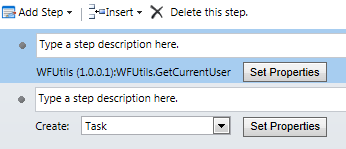
After the Custom Activity is deployed using the Plugin Registration Tool, a new step is available

and the output parameter (Current User) can be used inside other steps


July 16, 2013

How to bind a function to the Sub-Grid refresh event

A common customization requested by customers is to execute some logic when a Sub-Grid is refreshed. Unfortunately the Xrm Object Model doesn't provide a method to bind a function to the refresh event.
To implement this functionality is necessary to use unsupported JavaScript code, paying attention when a new rollup is released.
The following code is compatible with UR12/Polaris update that introduced cross-browser support for CRM 2011.
function AddEventToGridRefresh(gridName, functionToCall) {
   // retrieve the subgrid
   var grid = document.getElementById(gridName);
   // if the subgrid still not available we try again after 1 second
   if (grid == null) {
       setTimeout(function () {AddEventToGridRefresh(gridName, functionToCall);}, 1000);
       return;
   }
   // add the function to the onRefresh event
   grid.control.add_onRefresh(functionToCall);
}
Is possible to use the AddEventToGridRefresh function in two different ways. Assuming to attach the following function:
// function used in this example
function AdviseUser() {
   alert("Sub-Grid refreshed");
}
The function can be called directly passing the parameters inside the dialog box


or inside another JavaScript function:
function OnLoad() {
   AddEventToGridRefresh('accountContactsGrid', AdviseUser);
}
The first parameter is a string and quotation marks are necessary, the second parameter is the name of the function and must be written without quotation marks.

July 9, 2013

Set Account's Primary Contact as Recipient when creating a new Phone Call

When a new Phone Call is created starting from an Account, the default recipient is the Account itself.
If we want to set the Primary Contact of the Account as Recipient, we need to call the following function inside the OnLoad event of the Phone Call entity.
function ChangePhoneCallRecipientFromAccountToPrimaryContact() {
    // check if is a new phone call
    if (Xrm.Page.ui.getFormType() == 1) {
        // get the Phone Call To Recipient
        var to = Xrm.Page.getAttribute("to").getValue();
        // if the Recipient is an account we continue
        if (to != null && to[0].entityType == "account") {
            // get the account Id
            var accountId = to[0].id;    
            // get the right url for the OData Query
            var serverUrl;
            if (Xrm.Page.context.getClientUrl !== undefined) {
                serverUrl = Xrm.Page.context.getClientUrl();
            } else {
                serverUrl = Xrm.Page.context.getServerUrl();
            }
            // build the request
            var ODataPath = serverUrl + "/XRMServices/2011/OrganizationData.svc"; 
            var accountRequest = new XMLHttpRequest();
            accountRequest.open("GET", ODataPath + "/AccountSet(guid'" + accountId + "')", false); 
            accountRequest.setRequestHeader("Accept", "application/json"); 
            accountRequest.setRequestHeader("Content-Type", "application/json; charset=utf-8");
            // execute the request
            accountRequest.send();
            if (accountRequest.status === 200) {
                var retrievedAccount = JSON.parse(accountRequest.responseText).d;
                // retrieve the primary contact of the account
                var primaryContact = retrievedAccount.PrimaryContactId;
                // if there is a primary contact we set as new To Recipient
                if (primaryContact.Id != null) {
                    var newTo = new Array();
                    newTo[0] = new Object();
                    newTo[0].id = primaryContact.Id;
                    newTo[0].name = primaryContact.Name;
                    newTo[0].entityType = primaryContact.LogicalName;
                    Xrm.Page.getAttribute("to").setValue(newTo);
                }
            }
            else {
                alert("error");
            }
        }
    }
}